What official summaries describe
Non-technical summaries describe project objectives, predicted harms, expected benefits, and the animals involved. They are useful because they translate parts of the research system into more public language.
This page keeps the language simple. When a summary says a dog is dosed, sampled, monitored, confined, operated on or killed, we say that clearly.
Common procedures described
Dosing
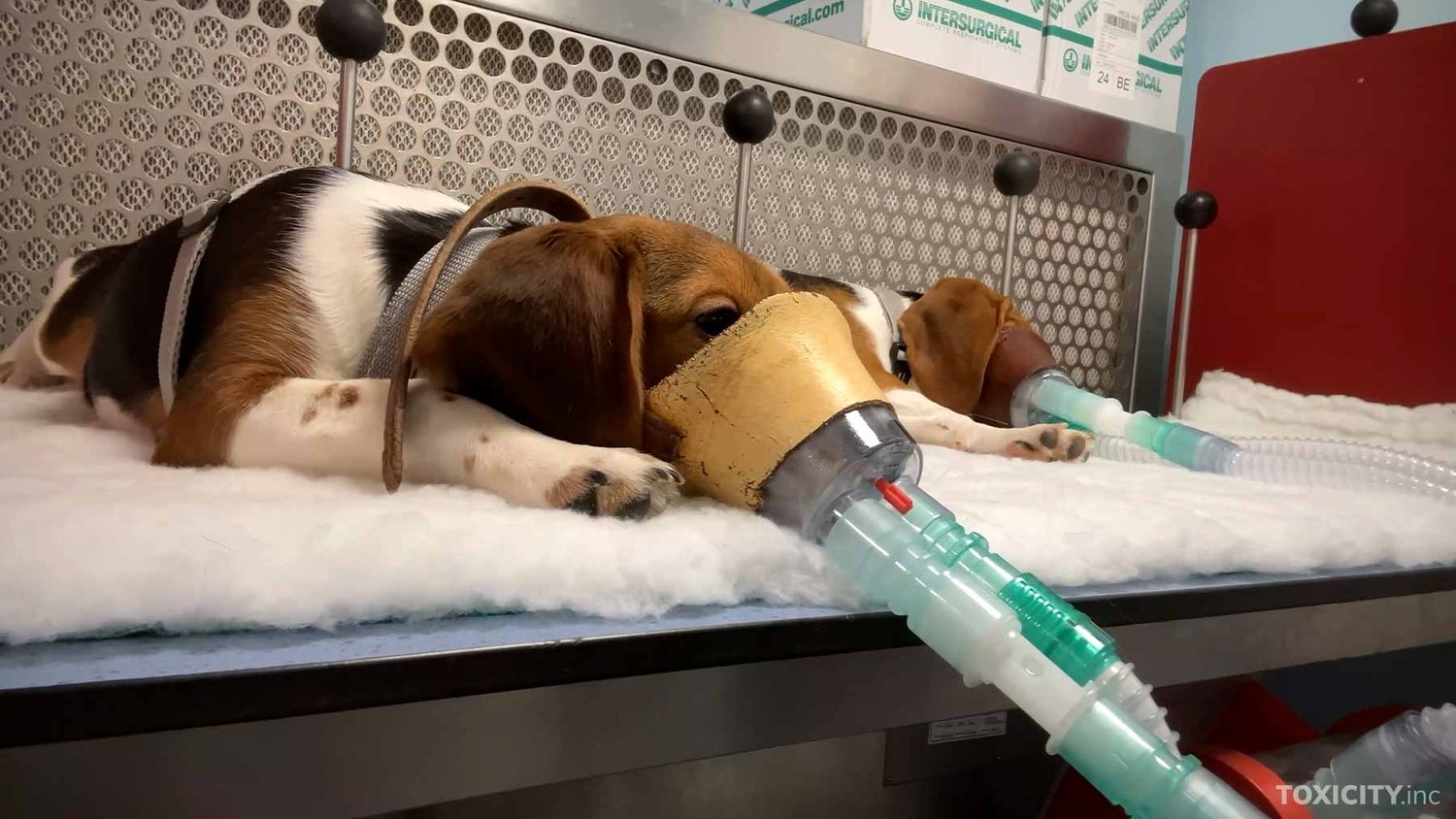
Some summaries describe dogs being given substances by mouth, injection, skin application, inhalation or other routes. In some studies this means a tube forced down the throat into the stomach or a mask used for forced inhalation.
Sampling and monitoring
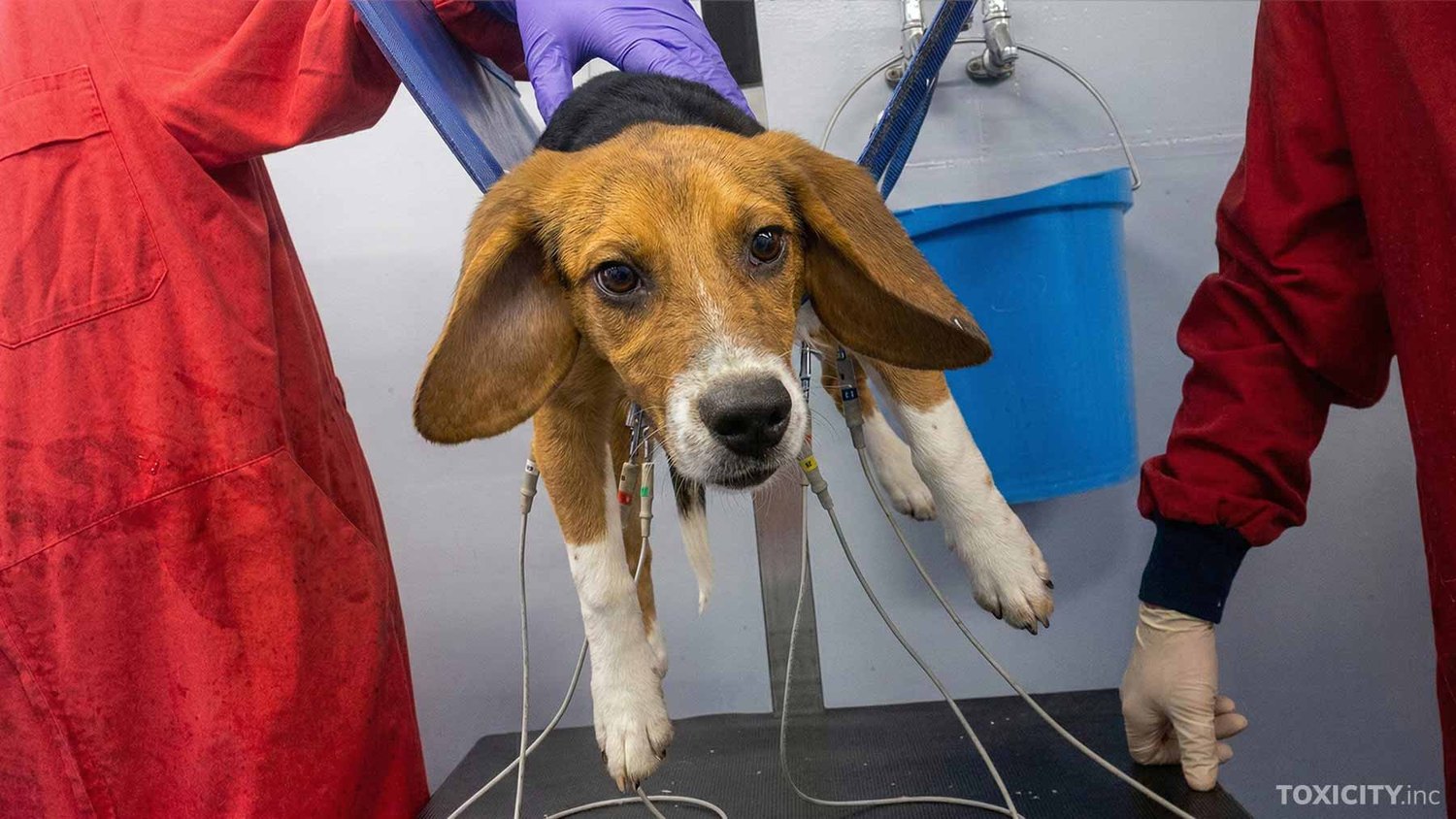
Summaries may describe blood or urine sampling, ECG monitoring, or blood pressure recording. Some studies involve repeated sampling over hours, days or months. Some dogs are bled to death as donors to other animals.
Restraint, confinement or surgery
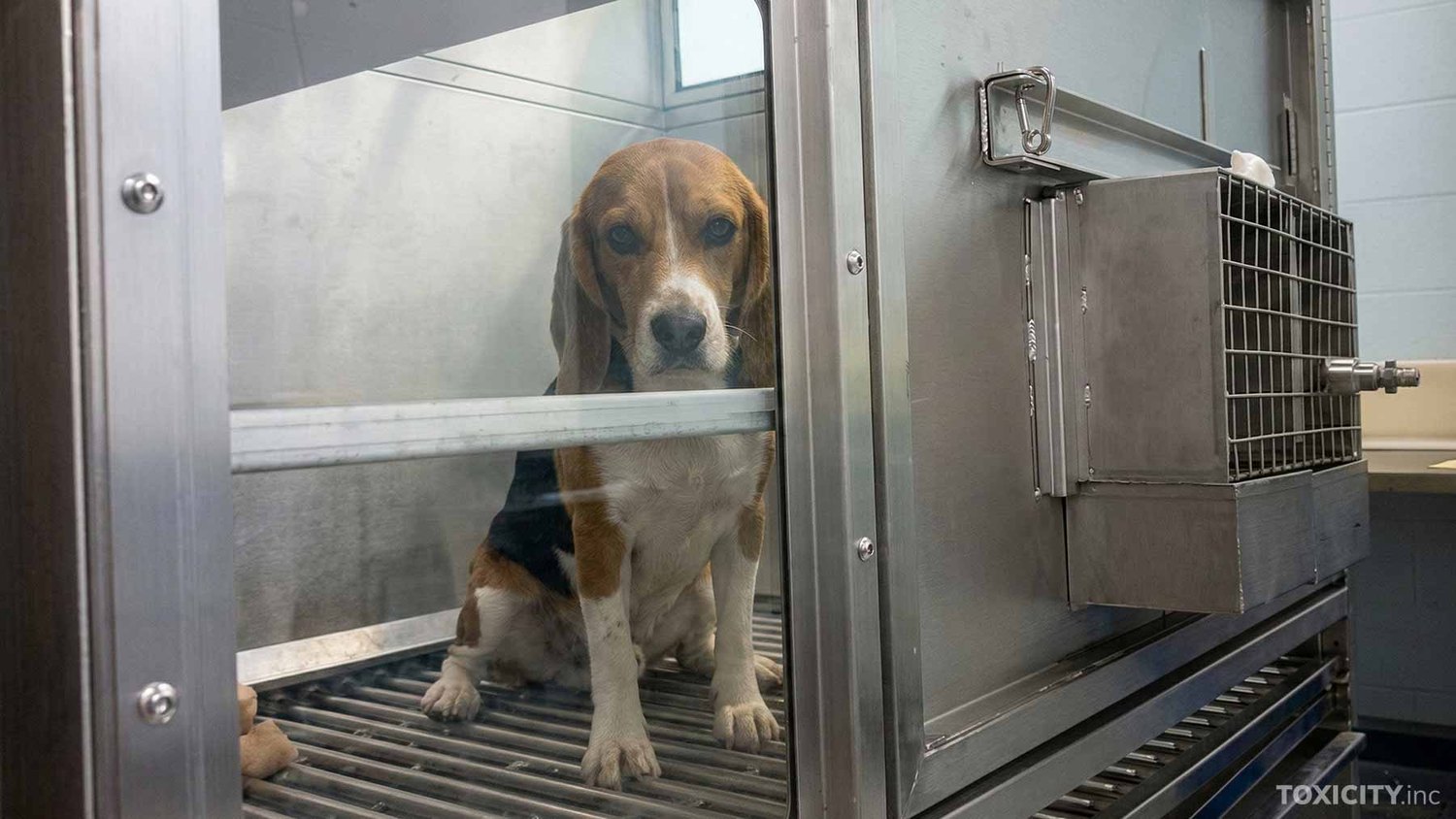
Some projects include restraint and isolation. Some include surgery to fit tubes, monitoring equipment or other devices.
Killing, re-use or rehoming
Many summaries describe dogs being killed at the end of studies so their organs, tissues or blood can be examined or collected. Some describe "re-use" in other experiments or rehoming depending on the project.
A note on words like “mild”
Official summaries often use labels such as “mild” and “moderate”. These words offer no moral reassurance.
These labels only apply to the procedure itself and in many cases "mild" cases involve killing the dog at the end of the study. A dog can be dosed, bled, confined, operated on and then killed — while the official record still considers this treatment "mild".
When a dog is killed, that is not mild experience to the sentient being whose life has been taken.
Real dog experiments, year by year
Drag through the years below. These are not rumours. They are plain-language summaries of official project licences, showing what the system has allowed dogs to go through.
What should a decent society do with these records?
These summaries are not graphic. They are not exaggerated. They are drawn from the government’s own paperwork. And still, the pattern is hard to accept: dogs dosed, bled, confined, operated on, used as biological supply, then killed.
Regulation may steer the system. It very rarely enforces and does not protect these dogs effectively.
Breeding dogs for laboratory experiments should end, now.
Dogs’ suffering matters because dogs are feeling beings
Dogs may not think or feel exactly like humans but their suffering is real. Dogs are mammals with nervous systems, bodies that can be injured, and behaviour that changes when they are in pain or distress.
In ordinary life, when a dog limps, withdraws, stops eating, becomes anxious, or reacts to a painful area, we notice and take action to stop what's troubling them. We understand it as a sign that something is wrong. Veterinary medicine does the same.
UK law recognises animal sentience
The Animal Welfare (Sentience) Act 2022 recognises certain animals as sentient beings. Government guidance says this includes all vertebrates other than humans, which includes dogs.
Veterinary bodies define sentience in terms of feelings
The British Veterinary Association says sentience should mean the capacity to have feelings, including pain and pleasure, with a level of conscious awareness.
The Animal Welfare Act protects animals from cruelty and neglect.
The act makes it an offense to cause unecessary suffering and sets minimum standards for welfare. It explicitly excludes animals bred for testing.
Veterinary pain guidance includes dogs
World Small Animal Veterinary Association pain guidelines state that the ability to experience pain is shared by all mammals, including companion animals.
Dogs show pain through behaviour
Cornell University’s veterinary guidance explains that because dogs cannot verbally communicate pain, understanding nonverbal cues is critical for recognising and managing it.
They deserve better than this
Dogs used in experiments are not objects. They are sentient animals. Dogs are not just statistics. They feel fear, pain and stress much like us. Any system that breeds them for unecessary, painful procedures needs to be changed.
The statistics show scale. The official summaries show what can happen. But the moral reason these facts matter is simple: the dogs involved suffer needlessly.